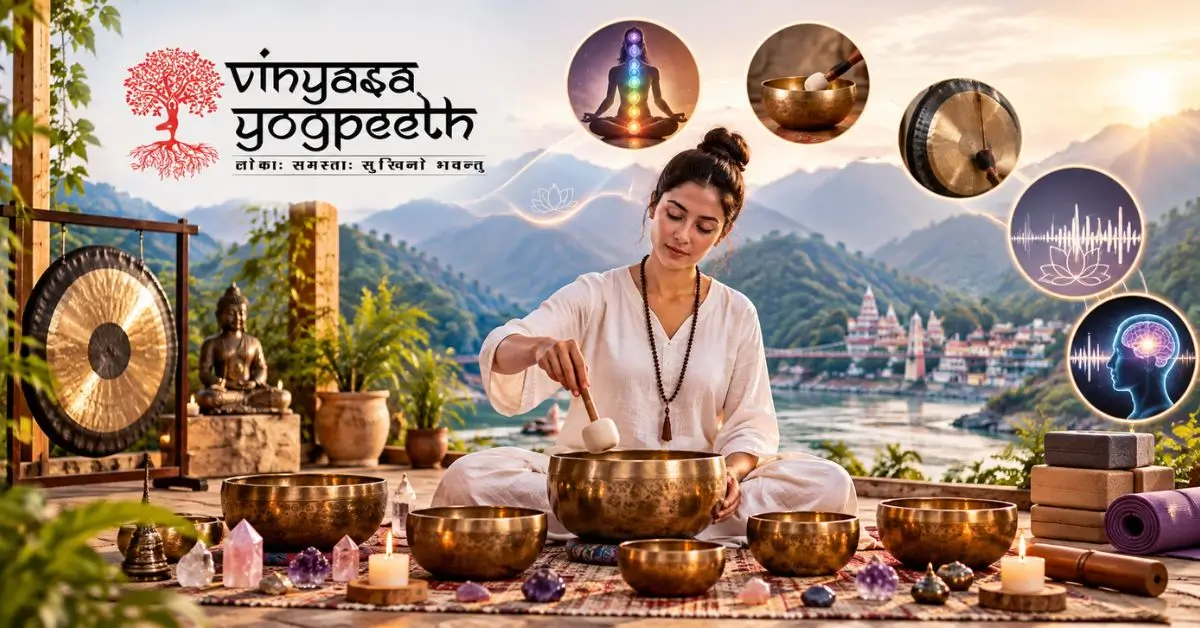
Sound has always played a role in yoga, meditation and spiritual practices. It’s also central to traditional wellness systems around the world. People use sound in ways—like chanting mantras playing singing bowls, gongs or bells—to help calm the mind focus attention and go deeper into awareness.
A Sound Healing Course offers a path for learning how to work with these tools properly. Good training doesn’t just teach you how to play an instrument. It should include techniques for using sound to relax how to handle instruments safely how to structure a session, how to guide meditations and important professional ethics. Importantly it should give real hands-on experience.
At the time interest in sound-based healing has grown because of research into music and health. The U.S. National Center for Complementary and Integrative Health (NCCIH) says that music can influence brain areas linked to emotion, sensation, movement and thinking. Studies on music-based therapies suggest benefits, for stress, anxiety, pain and overall well-being. Still NCCIH reminds us that much of this evidence is still not fully proven. Music-based approaches shouldn’t be seen as treatments.
For someone who loves yoga, meditation or holistic wellness or who wants to lead relaxation sessions sound healing training can be an addition. It adds a way to support people’s peace and connection—without replacing what’s already there.
What Is a Sound Healing Course?
A Sound Healing Course is a program that teaches students how sound and vibration are used in relaxation, meditation and traditional wellness practices.
-
Basics of sound and vibration
-
Techniques with singing bowls
-
Use of gongs and percussion instruments
-
Meditation with sound
-
Nada Yoga and mantra practice
-
Relaxation and breathing awareness
-
Planning a basic session
-
Individual and group sound sessions
-
Professional communication and ethics
-
Hands‑on assessment
It is important to understand what "healing" means in this context. Sound Healing is generally used as a wellness practice not as a replacement for diagnosis or medical treatment.
Scientific evidence is more established for interventions in general than for every claim associated with commercial Sound Healing. A 2025 systematic review of 19 studies on singing bowls found potential benefits for anxiety, depression, sleep and some physiological outcomes but the researchers also noted limitations, across the available evidence.
That distinction matters when choosing a training program. A responsible course should teach students how to present Sound Healing work rather than promising that particular frequencies can cure diseases.
Why Study Sound Healing in India?
Sound Healing India feels a bond with yoga, mantra, meditation, Nada Yoga and traditional spiritual practices.Sound Healing India is rooted in a history of using sound as part of spiritual disciplines. Mantra recitation, chanting, devotional singing, bells and contemplative practices all show how sound can be integrated into a broader yogic environment.
Sound Healing India programs may blend these traditions with wellness practices. In programs students learn how to use singing bowls and other instruments and they also grow their meditation and mindful listening skills.
For students Sound Healing India offers an immersive setting where sound practices are learned together with yoga, philosophy, breathwork and meditation.
This does not mean every course, in India follows a traditional lineage. Courses vary a lot prospective students should check the real curriculum, teachers, practice hours and certification details before enrolling.
What do you Learn in Sound Healing Training?
A strong Sound Therapy Training program should go beyond just showing students instruments. It needs to include theory so students understand the science and purpose behind what they are doing. At the time it must offer plenty of hands-on practice so students can develop control build listening skills and grow confidence in their work.
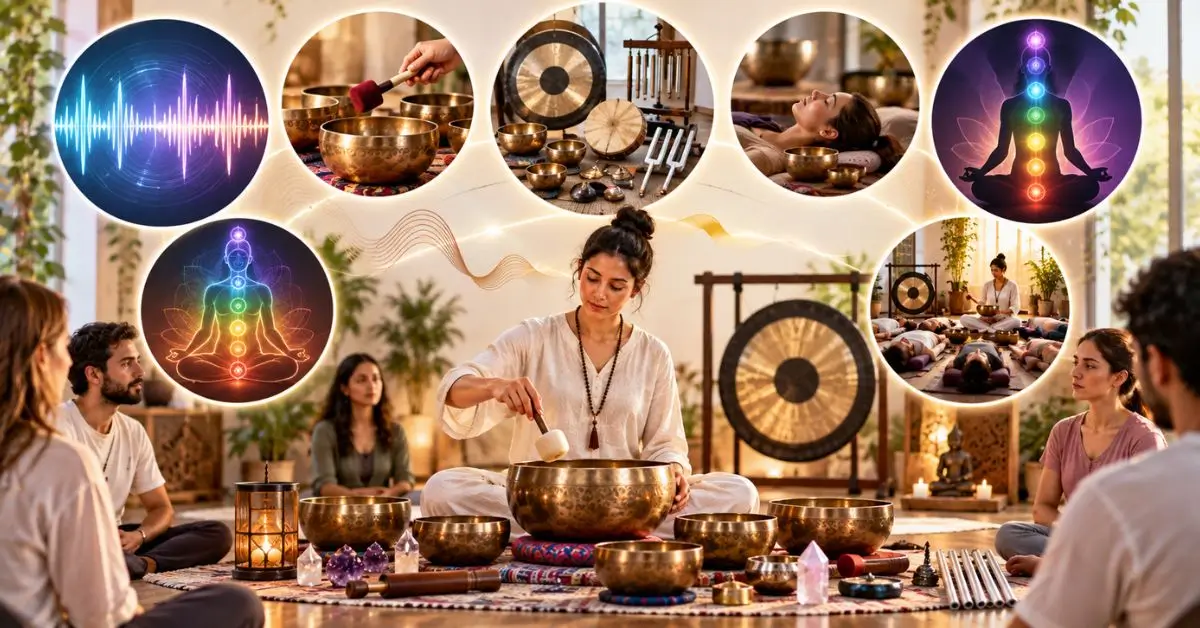
Sound and Vibration Fundamentals
The part of any good training introduces basic sound concepts. These include frequency, pitch, resonance, rhythm, tone, intensity and vibration. Students learn how sound waves travel and how different instruments create sounds.
They also discover why the same instrument—like a singing bowl—can make tones depending on how it is played. A quality course makes sure to separate facts from traditional energetic beliefs. This helps students understand both sides without confusion.
Tibetan Singing Bowls
Singing bowls are one of the well-known tools in modern sound healing. In training students learn skills such as:
-
How to hold and place a bowl properly
-
Correct ways to strike the bowl
-
Using a mallet around the rim for smooth tones
-
Controlling volume and adjusting tone
-
Creating long-lasting resonance
-
Combining multiple bowls for layered sound
-
Structuring a simple sound meditation
Handling the bowl correctly matters a lot. Good sound therapy relies more on sensitivity and precision than on loudness. Listening carefully and managing sound with skill is essential.
Gongs and Other Instruments
Depending on the level of the course students may get experience with a range of sound healing instruments. These include:
-
Gongs
-
Tuning forks
-
Tingsha
-
Bells
-
Chimes
-
Drums
-
Shakers
-
Ocean drums
-
Rain sticks
Each instrument has its unique behavior. A strong training program teaches students how to introduce each one combine them safely and manage them during a session. Knowing how to balance sound is key to creating an effective experience.
Sound Meditation and Relaxation
Another important part of sound therapy training is learning how to support meditation and relaxation. Students practice guided sound meditations, listening, breath awareness, body relaxation and sound baths. The goal is not to force a feeling or reaction. Instead the aim is to help people calm their minds and shift into a state naturally.
Working With Chakras and Traditional Energy Systems
Many modern sound healing courses include chakra-based practices. Students may study how certain sounds, musical notes, mantras or instruments connect to the seven energy centers in the body.
These associations come from spiritual traditions like yoga and tantric systems. It's important that these ideas are taught clearly as models not as proven medical facts. Understanding this distinction keeps the training respectful and grounded.
One-to-One and Group Sessions
Professional training must prepare students for both group settings. A one-on-one session allows for an approach, where the therapist chooses instruments and techniques based on the client’s needs.
In a group setting like a bath several people lie or sit comfortably while the facilitator plays various instruments. Students learn how to structure a session—from introduction, to closure—and how to guide participants with clear communication. They also practice reading responses. Adapting in real time.
Benefits of Taking a Sound Healing Course in Goa
There are advantages to learning about healing even if the main goal is not to become a full-time practitioner.
Develop Real Sound Skills
Students learn how to use singing bowls and other instruments in a way instead of just playing around with them.
Improve Ability to Guide Others
A solid course shows how to help people relax and meditate while staying calm and professional during the process.
Grow Your Own Practice
Sound meditation can be added to a persons yoga or meditation routine. Some studies have shown that using singing bowls might help with anxiety and overall well-being. More research is still needed.
Add a Useful Wellness Skill
Yoga teachers, meditation instructors, retreat leaders and other wellness professionals can use practices to support their current work.
Get a Clear Learning Experience
Learning with a teacher can be more helpful than buying instruments and trying to learn advanced methods, on your own without guidance.
How Sound Healing May Support Relaxation?
One of the reasons people explore sound practices is relaxation.
Music and sound can influence brain processes involved in emotion, attention and sensory perception. The National Center for Complementary and Integrative Health reports that research into music-based interventions has shown results for stress and some forms of anxiety although findings vary by intervention and population.
Research on Tibetan singing bowls is also emerging. A 2025 systematic review found that many included studies reported reductions in anxiety and depressive symptoms and improvements in being. However the authors noted heterogeneity and limited evidence that prevented a meta-analysis.
This makes sound healing particularly suitable, to frame as a relaxation and complementary wellness practice than a guaranteed medical therapy.
Sound Healing Rishikesh: Why Choose Rishikesh for Training?
Sound Healing Rishikesh is a popular search topic because Rishikesh is internationally associated with yoga, meditation, spiritual learning, and teacher training.
The environment can be especially attractive to students who want to combine sound studies with yoga and contemplative practices.
A residential training program in Rishikesh may allow students to experience a daily rhythm that includes:
-
Yoga and meditation
-
Sound practice
-
Mantra and chanting
-
Practical instrument sessions
-
Reflection and self-practice
-
Interaction with students from different countries
Rishikesh also has a growing number of specialized sound programs. Current course offerings in the city range from short workshops focused on singing bowls to multi-level teacher trainings covering bowls, gongs, tuning forks, sound baths, and session facilitation.
The important point is not simply choosing Rishikesh. It is choosing a school that offers sufficient practical training, experienced teachers, transparent certification, and responsible instruction.
How to Choose the Right Sound Healing Institute?
Choosing a Sound Healing Institute requires more than comparing course fees. It demands attention to what the program actually offers.
Check the Curriculum
Look for a course that includes both theory and hands-on practice. A useful curriculum should cover instruments, sound meditation, session facilitation, safety, communication and professional boundaries. These are not topics—they are essential for anyone who wants to work responsibly with sound healing.
Research the Teachers
Look at the instructor’s background in healing, yoga, meditation, music or related disciplines. Teaching experience matters because practical sound work is difficult to learn from written material. You want someone who has actually practiced and guided sessions not just studied them.
Look for Practical Training
A course that consists mostly of lectures may leave students underprepared. Ask how much time is spent actually playing instruments practicing sessions receiving feedback and observing demonstrations. Hands-on experience builds confidence and competence in ways that reading alone cannot.
Understand the Certificate
Do not assume that every "international," "global," or "professional" certificate has the meaning.
Before enrolling ask:
-
Who issues the certificate?
-
What does successful completion require?
-
Is there an assessment?
-
How many practical hours are included?
-
Is the certification specific to sound healing or simply attendance?
Certification can demonstrate completion of training. It does not automatically turn a person into a licensed healthcare professional.
Review. Ethics
A credible program should discuss volume levels, participant comfort, contraindications where communication, informed consent and referral to healthcare professionals when someone has a medical concern.
NCCIH notes that loud sound can contribute to hearing damage, which is an important consideration, for anyone conducting sound-based sessions. Safety must be taken seriously—both for the practitioner and the client.
Sound Healing Course Curriculum: What Should You Learn?
A rounded curriculum can be divided into several stages.
Module 1: Introduction to Sound
-
Understanding the nature and properties of
-
Key concepts like frequency, pitch, resonance and rhythm
-
How sound is used in yoga and meditation
-
Basic introduction to Nada Yoga
Module 2: Singing Bowls
-
Different types of singing bowls available
-
Guidance on choosing the bowl for each situation
-
Techniques for playing the bowls
-
Methods such as striking and circling
-
Tips for creating long sustained tones
-
How to combine multiple bowls for richer sounds
Module 3: Sound Meditation
-
Practicing mindful listening
-
Guided relaxation using sound
-
Focusing on breath awareness
-
Using sound as a foundation for meditation
-
Setting up an peaceful environment for sessions
Module 4: Advanced Instruments
-
Working with gongs
-
Use of tuning forks
-
Tingsha and bells
-
Chimes and drums
-
Combining different instruments for layered effects
Module 5: Session Facilitation
-
Conducting one-to-one sound therapy sessions
-
Leading group sound baths
-
ways to open and close a session
-
Effective communication, with participants
-
Planning sessions carefully
-
Maintaining professional boundaries
Module 6: Practical Assessment
Students should get a chance to show they can use instruments safely. They should also be able to lead a basic sound session confidently. This practical assessment is one of the best ways to tell real Sound Therapy Training apart from courses that focus only on theory.
Certification After a Sound Healing Course
A sound healing certificate usually means that a student has finished the course and passed any tests needed by the training school. The worth of the certificate depends on the school how the course takes, whether there are hands-on requirements the experience of the teachers and how clear the certification is.
Students should not pick a program just because its website says the certificate is "globally recognized." It's important to find out which organization gives the credential and what you are allowed to do with it.
Also it helps to know the difference, between a healing certificate and official healthcare qualifications. A sound healing certificate does not let someone diagnose illness give treatment or take the place of licensed health care services.
Sound Healing Career Opportunities
Completing a Sound Healing Course can help with different types of wellness work.
Sound Healing Practitioner
You can offer one-on-one relaxation-focused sound sessions using singing bowls, gongs or other instruments as part of your training.
Sound Bath Facilitator
You can organize group sound baths in yoga studios, retreats, wellness centers, community spaces or private areas.
Yoga and Meditation Teacher
Yoga teachers can include practices in meditation, relaxation, mantra or restorative sessions.
Retreat Facilitator
Sound sessions can be added to yoga retreats, meditation retreats, wellness experiences and holistic workshops.
Independent Wellness Practice
Some professionals create their private practice or include sound work with other non-medical wellness services they are trained to offer.
A career in this area is not, about certification. Communication, hands-on skills, ethical limits, business abilities and ongoing learning are just as important.
Who Can Join a Sound Healing Course?
Many introductory programs are open to beginners. Do not require musical training. Beginners can start without any music lessons. A suitable course may be useful for:
-
Yoga teachers
-
Meditation instructors
-
Wellness practitioners
-
Retreat facilitators
-
Therapists in complementary approaches
-
Musicians interested in therapeutic applications of sound
-
Spiritual practitioners
-
Beginners exploring sound meditation
You do not necessarily need to be an experienced musician. Musicians who are new, to this field are welcome. What matters more is your willingness to listen carefully practice consistently and learn facilitation.
Is Sound Healing Safe?
For healthy adults moderate sound and music-based practices are generally considered low risk but "safe" does not mean risk‑free. Volume is especially important. Loud sound can harm hearing and some sounds may feel emotionally uncomfortable or overwhelming for certain people. NCCIH also says that music can bring memories and emotions to some individuals.
A responsible practitioner should therefore:
-
Keep volume at levels
-
Ask participants about sound sensitivity
-
Avoid forcing participation
-
Explain what the session involves
-
Allow participants to leave or pause
-
Respect personal and cultural boundaries
-
Refer health concerns to appropriate professionals
People with medical conditions or unusual sensitivity to sound should discuss concerns, with an appropriate healthcare professional before participating in unfamiliar practices.
Sound Healing vs Music Therapy: What Is the Difference?
These terms should not be thought of as the thing. Sound healing is usually used to talk about ways to help with wellness that use sound, vibrations, meditation or tools like singing bowls and gongs.
Music therapy is different. It is a job in the healthcare world. The NCCIH says that music therapy is when people who are trained use music, in a way to help with health issues. They work with patients to help with their body, feelings, thinking or how they act around others.
A person who is offering a healing program should make sure to explain what they do clearly. They should not say they have medical training if they do not.
Why Choose Vinyasa Yogpeeth for Your Sound Healing Journey?
Vinyasa Yogpeeth provides yoga education that is based on ways of practicing. These ways include asana, pranayama, meditation, philosophy, anatomy and how to teach yoga. The schools training details also talk about learning in a way help from teachers and a clear way to learn yoga.
For people who want to mix ways of using sound with yoga and meditation this kind of learning place can help build a strong base.
A program that uses sound should be looked at carefully on its own. Before joining students need to check the list of what is taught how much time is spent practicing, who the teachers are, how long the course takes, how students are tested and what kind of certificate they get.
You can visit Vinyasa Yogpeeth to find out more about the way they teach yoga and what programs they have.
Conclusion
A designed Sound Healing Course can teach much more than how to play a singing bowl. It can introduce students to the nature of sound the practice of meditation the art of listening techniques for using instruments how to guide sessions and the important responsibilities that come with working with other people.
Interest in sound-based wellness keeps growing and current research does show some results, for singing bowl and music-based practices. These practices seem to help with relaxation reduce stress, lower anxiety and support well-being. Still the evidence is not strong enough to prove all the claims that are sometimes made about sound healing.
If you are comparing Sound Therapy Courses picking the Sound Healing Institute is essential. Do not let marketing language mislead you. Compare the Sound Therapy Courses curriculum, the Sound Healing Institute practical hours the Sound Healing Institute teacher experience, the safety education, the assessment and the certification.
For students who want to blend sound with a wider yogic education studying in Sound Healing India is a choice. Sound Healing India in a yoga-centered environment like Rishikesh or another established yoga destination can give an immersive learning experience.
The strongest foundation comes from learning sound practices with curiosity, practical discipline, realistic expectations and respect, for both knowledge and modern evidence.