Breathing is one of the natural things we do. In yoga, breathing takes on a more intentional role through a practice called pranayama. Among the breathing techniques passed down through tradition alternate-nostril breathing stands out. It is widely practiced because it is slow controlled and deeply meditative.
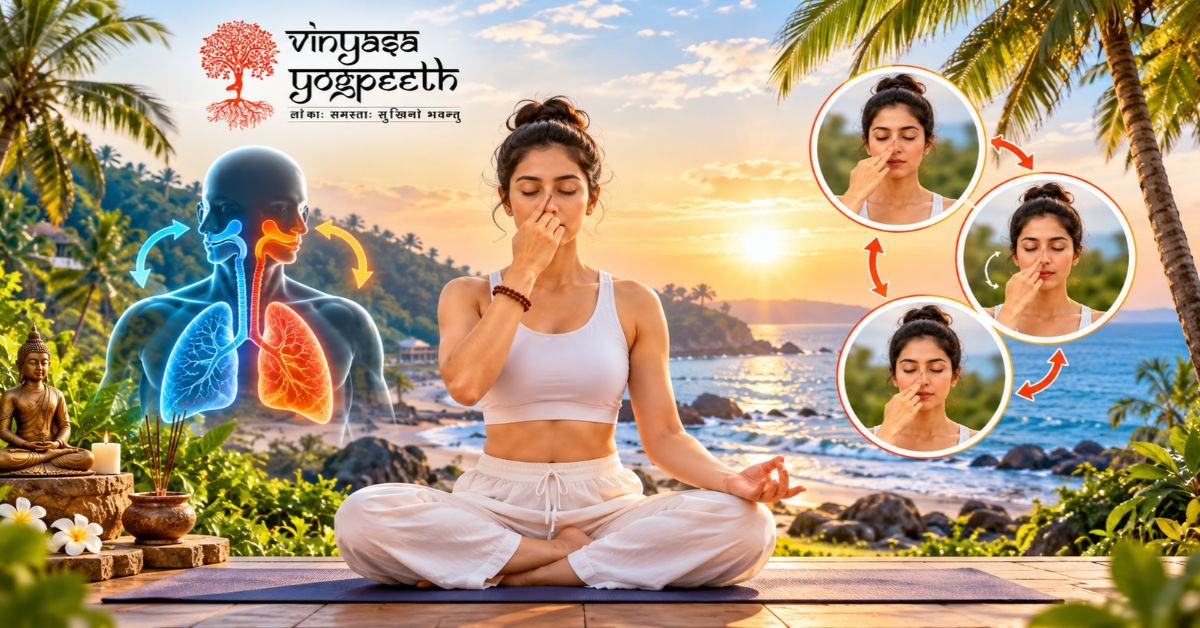
The technique involves breathing in and out through one nostril at a time switching sides in a rhythmic pattern. It can be done while sitting in a place. No special tools or equipment are needed, which makes it simple for many people to try.
In yoga, this method is linked to balancing the flow of prana—often described as life energy—and to helping the mind become still before meditation. Today scientists have looked into alternate-nostril breathing to see what it might do for blood pressure, heart rate, anxiety levels and breathing function. Results from studies vary. Some findings are promising, while others are less clear depending on how the research was designed.
This guide will explain the anulom vilom pranayama technique. It will cover what the name means, how to practice it the way, possible benefits, common errors to avoid, and important safety tips for beginners.
What is Anulom Vilom?
Anulom Vilom is a pranayama technique that is often called alternate nostril breathing in English. The basic pattern is to breathe in through one nostril switch sides and then breathe out through the other nostril. The sides are then changed so that the breath moves through both nostrils in a controlled way.
This practice is part of the tradition of pranayama in yoga. The information provided explains that Anulom Vilom is one style of pranayama and talks about breathing through the left and right nostrils.
Different yoga schools might use the names Anulom Vilom and Nadi Shodhana in different ways. Because of this, students should follow the method taught by their trained teacher of thinking that all schools do it exactly the same way.
Anulom Vilom Meaning
Anulom vilom is traditionally explained using Sanskrit words that describe the direction or pattern of breathing. In practice, the left and right nostrils are also associated with the traditional concepts of Ida and Pingala Nadis. I notice that Ida and Pingala Nadis are energy routes described in old yoga philosophy.
The supplied source presents the left side as Chandra and the right side as Surya in this traditional framework. These concepts belong to the yogic model and should not be confused with the body structure of veins, arteries or nerves. In practice the main point is much simpler: you breathe through nostrils using a controlled steady breathing rhythm.
How to Do Anulom Vilom?
Learning how to do anulom vilom pranayama correctly is more important than trying to increase the duration
1. Choose a Comfortable Position
- Sit comfortably on the floor or on a chair.
- Keep your spine upright without making your back rigid.
- Relax your shoulders. Allow your face to remain soft.
- This helps your body stay relaxed and your breath flow easily.
2. Settle Your Breathing
- Close your eyes if comfortable. Take a few natural breaths.
- Do not begin by taking deep breaths.
- Allow your breathing to settle first.
- Let your breath become steady and calm.
3. Position Your Hands
- Rest your hand comfortably on your knee.
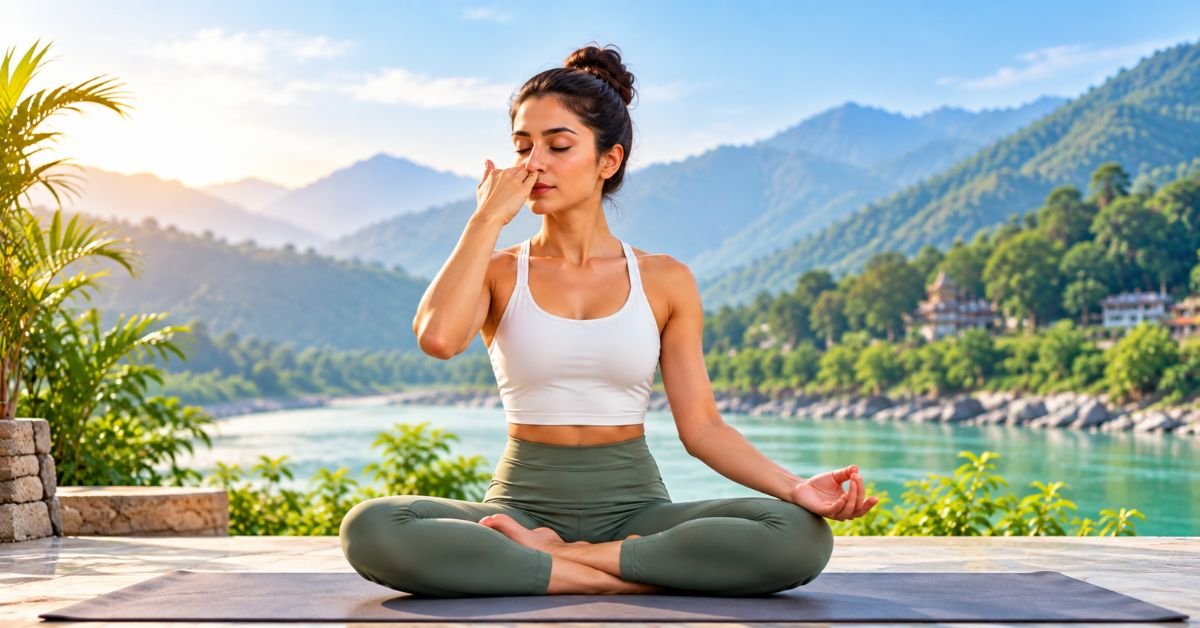
- For the hand position the right hand can be used to control the nostrils.
- Different schools may teach different hand positions so follow the method provided by your teacher.
- Use your thumb and ring finger to close the nostrils as needed.
4. Gentle Exhalation
- I start by breathing out.
- I do not exhale all.
- I let the breath go smoothly and gently.
- The breath will get my body ready, for the breath.
5. Breathe Through One Nostril
- Close one nostril and inhale from the other one.
- The breathing should be slow and comfortable.
- Do not be too quick in doing so.
6. Change Sides
- Close the nostril through which you inhaled and open the nostril.
- Exhale, through the other side.
- Let the breath flow out with ease.
7. Continue the Alternating Pattern
- Inhale through the side where you just finished exhaling then switch and exhale through the opposite nostril.
- This makes one alternating cycle.
- The source material explains the flow—inhale, through one nostril, switch exhale through the other then reverse the order.
- Keep going like this for many rounds as you want.
8. Finish Slowly
- When you have completed your chosen number of rounds lower your hand and return to breathing.
- Sit quietly for a moments before opening your eyes.
- Let your body settle back into a state.
- Take a moment to notice how you feel.
Breathing Rhythm for Beginners
I find that beginners should prioritize comfort and consistency of complicated breathing ratios.
Begin with a pattern where inhalation and exhalation are about the same length. When the breathing technique feels natural an experienced teacher may introduce an exhalation.
The supplied reference describes inhalation and exhalation for beginners and I notice that traditional practices may eventually introduce breath retention and specific breathing ratios.
Breath retention, known as kumbhaka should not be introduced simply because a particular breathing ratio appears online. I believe it is better learned progressively under instruction.
Anulom Vilom Pranayama Benefits
The anulom vilom benefits that receive the research attention relate to autonomic regulation, cardiovascular measures, breathing and psychological well-being.
The anulom vilom pranayama benefits that receive the research attention relate to autonomic regulation, cardiovascular measures, breathing and psychological well-being. It is important to distinguish between benefits supported by research and traditional claims associated with yoga philosophy.
1. May Support Relaxation
Slow controlled breathing can encourage a breathing pattern and may help reduce feelings of stress.
Studies about breathing have looked at results such as anxiety, well-being, and heart rate variability. One randomized study involving students examined Bhastrika and Anulom Vilom along with yoga practice and reported changes in anxiety and other measures after six weeks.
2. May Support Healthy Blood Pressure
Alternate-nostril breathing has been studied specifically for blood-pressure regulation. A 2024 systematic review and meta-analysis of controlled trials found reductions in systolic and diastolic blood pressure with alternate-nostril breathing although the researchers also noted substantial heterogeneity between studies. This does not mean the practice should replace treatment for hypertension.
3. May Support Cardiovascular Regulation
Slow breathing practices can influence heart rate and other measures of function. A broader meta-analysis of breathing exercises found reductions in blood pressure and heart rate although the included interventions were not limited to Anulom Vilom.
4. May Support Respiratory Function
Research on yogic breathing is also investigating lung function. A 2026 systematic review and meta-analysis of 11 studies involving adults found that yogic breathing practices, including Anulom Vilom among other techniques were associated with improvements in several pulmonary-function measures. However the review examined breathing techniques rather than Anulom Vilom alone.
5. May Encourage Focus and Mental Calm
The slow alternating pattern gives the mind a point of attention. Of following every passing thought the practitioner focuses on the breath, nostril changes and rhythm. This can make the practice useful as a preparation, for meditation.
Anulom Vilom Benefits in Traditional Yoga
Some traditional yoga explanations talk about Anulom Vilom as a way to balance or purify the Nadis. I find that Anulom Vilom is often described in terms of balancing the Nadis and cleansing them.
The supplied reference links Anulom Vilom with the Ida, Pingala and Sushumna channels. Explains Nadi purification inside the classical yogic view. I see how the reference places Anulom Vilom within the Ida, Pingala and Sushumna framework.
These ideas are traditional not measurements of blood vessels or nerves in modern anatomy. I notice that Anulom Vilom concepts are not, about anatomy measurements.
For an evidence based explanation I think it is better to describe nostril breathing as controlled breathing, relaxation and the physiological results that researchers have really measured. I prefer to talk about nostril breathing in terms of controlled respiration, relaxation and the real physiological outcomes.
How Long Should You Practice?
No single duration is required for every beginner to follow. A practical starting point is five minutes as long as breathing stays comfortable.
As your breathing technique becomes familiar you can gradually extend the session. Quality is more important than duration in breathing practice.
Practicing for five minutes with breathing is more useful, than spending fifteen minutes forcing deep breaths or struggling to keep a complicated ratio. A regular comfortable practice can also make it easier to notice how the technique affects breathing and state of mind.
Best Time to Practice
Anulom Vilom can fit into a morning yoga routine, a meditation session or a quiet part of the day.
Many people who practice Anulom Vilom like to do it when their stomach's light and the surroundings are calm.
A good routine might look like:
movement → Asana practice → Pranayama → Meditation → Rest
The exact order may change depending on the style of yoga you are doing.
Students who want to learn more about pranayama can check out Vinyasa Yogpeeth 200 Hour Multi-Style Yoga Teacher Training, in Goa. That program covers aspects of traditional and practical yoga.
Common Mistakes to Avoid
- Breathing Too Forcefully: Alternate-nostril breathing should generally feel smooth. Breathing hard or too strongly can make you uncomfortable.
- Pulling the Nose Too Hard: Your fingers should close the nostrils gently. There is no need to push hard.
- Holding the Breath Too Soon: Beginners do not need to hold their breath to practice the technique.
- Sitting With Tension: Your spine can be upright, without becoming stiff. Relax your shoulders relax your face relax your jaw.
- Chasing a Specific Benefit: Avoid practicing while constantly checking whether your blood pressure, concentration, or anxiety is changing. The practice itself should remain steady and comfortable.
Who Should Be Cautious?
I have found that healthy adults can usually do gentle breathing practices but individual circumstances matter.
I think people who have respiratory conditions, uncontrolled blood pressure, dizziness or other medical concerns should talk to pranayama with an appropriate healthcare professional or qualified yoga instructor before starting a new breathing practice.
If you feel dizzy, light‑headed short of breath or uncomfortable I suggest you stop and return to breathing.
I understand that breath retention deserves caution. The supplied reference recommends learning pranayama and warns that prolonged breath holding can potentially be harmful.
Anulom Vilom vs. Nadi Shodhana
In modern yoga classes people often use the names Anulom Vilom and Nadi Shodhana interchangeably.. Teachers and different traditions may have their own ways of describing Anulom Vilom and Nadi Shodhana especially when it comes to how long the breath should be, how long to hold it, where to put the hand and the exact steps.
Because of this it is an idea to learn the exact way that your yoga school shows for Anulom Vilom and Nadi Shodhana instead of thinking that every online guide means the same thing.
Why Learn Pranayama From a Qualified Teacher?
Pranayama may appear simple because the movement is minimal, but the details of breathing, posture, rhythm, and progression matter.
A qualified yoga teacher can help you understand:
- Comfortable breathing patterns
- Appropriate sitting posture
- Hand positioning
- Gradual progression
- Breath retention techniques
- When to modify a practice
For students interested in studying yoga beyond individual techniques, Vinyasa Yogpeeth offers multi-style teacher training programs in Goa, including 200-hour training that combines yoga philosophy, anatomy, teaching methodology, and practical learning.
Also Go Through: 100 Hour Yoga Teacher Training in Goa
Final Thoughts
Anulom Vilom is a structured pranayama practice. It uses alternate-nostril breathing to help develop awareness of the breath.
The anulom vilom benefits most supported by research are related to blood-pressure regulation, cardiovascular measures, relaxation and respiratory function. However the strength of evidence varies. Many studies look at breathing practices broadly rather than focusing only on anulom vilom.
Traditional yoga gives the practice a philosophical meaning. This comes through concepts such as Ida, Pingala and Nadi purification. These ideas connect the act of breathing to a larger spiritual framework.
For beginners it is important to keep the breathing gentle. Do not force breath retention. Focus, on consistency of complicated ratios. With instruction and a comfortable approach alternate-nostril breathing can become a useful component of a broader yoga and meditation practice.