
Some yoga practices are built around movement. Yin Yoga asks you to slow down, stay in a posture, breathe, and notice what is happening inside. Sound healing works in a similar way. Instead of presenting the mind with more things to think about, sound healing calms the mind.
That is why Yin Yoga and Sound Healing can feel so natural together. Yin gives the body time to settle, while sound gives the mind a soft point of attention. During a longer-held pose, the tone of a singing bowl, gong, or chime can make the quiet moments easier to stay with.
What is Yin Yoga?
Yin Yoga is a slow, mostly floor-based style of yoga in which postures are held for longer periods than in many active classes. Rather than moving quickly from one pose to the next, students settle into a position, use support when needed, and allow the breath to remain steady.
A Yin class may include seated forward folds, hip-opening shapes, twists, and supported backbends. The aim is not to push the body as far as possible. It is to find a position that can be held with awareness and without unnecessary strain.
Because there is less movement, students have more time to notice their breathing, physical sensations, and changing thoughts. This inward quality is one reason the practice is often connected with mindfulness and Yin Yoga meditation.
How Yin Yoga Encourages Stillness?
Stillness in Yin Yoga does not mean stillness in the traditional sense. It means remaining in a position long enough to allow the body to relax and the breath to naturally slow, and begin to notice what happens as the body stops constantly adjusting & moving to the next position.
At first, this can feel challenging. The body may want to move and the mind may look for distraction. Over time, steady breathing and patient observation can make those quiet moments feel more familiar. This is also why sound fits naturally into a Yin session. Once movement becomes minimal, each tone becomes easier to notice and can give the mind something gentle to return to.
What is Sound Healing?
Sound healing uses instruments, tones, resonance, and vibration to create a meditative or relaxing environment. During a session, participants usually sit or lie comfortably while a practitioner plays different sounds around them.
There is no music to memorize and no rhythm that needs to be followed. The practice is mainly about listening. For people who find complete silence difficult, Sound Healing for relaxation can provide a simple focus point: when the mind wanders, attention can return to the sound.
Common Sound Healing Instruments
Different Sound Healing instruments create different tones, vibrations, and moods during a session. Each instrument has its own sound quality and can be used at different stages of a Yin Yoga practice.
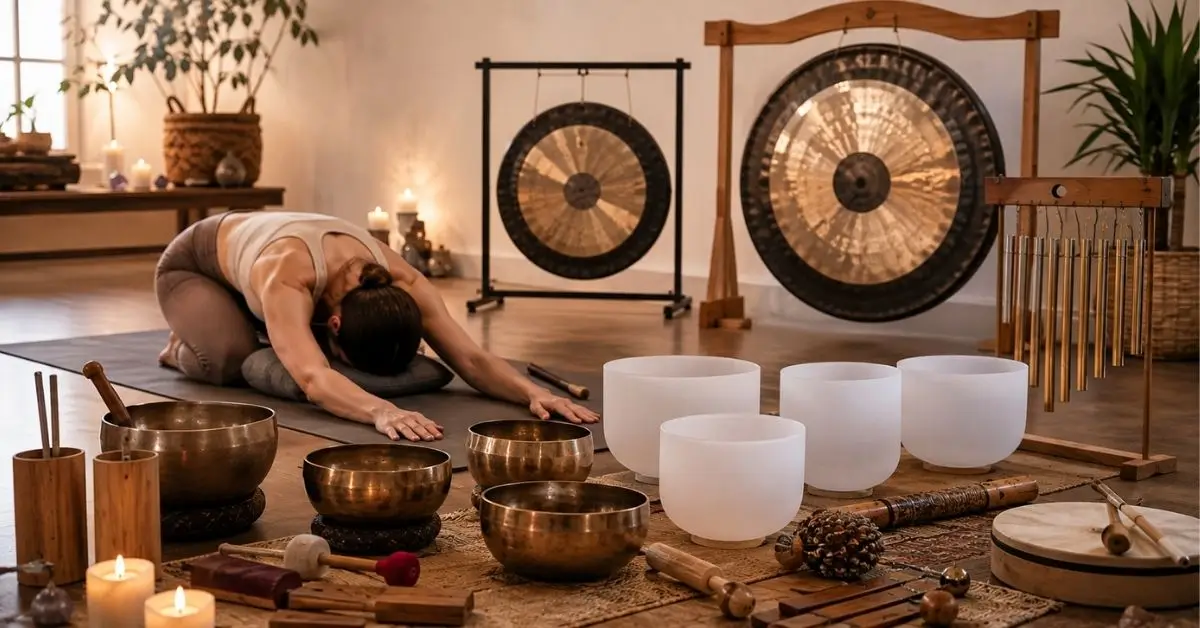
- Tibetan Singing Bowls: These are metal bowls that give layered deep tones when struck or as the rim is played. The steady deep tones provide a relaxing meditation guide for the mind to gently focus during the longer duration of a Yin Pose or relaxation.
- Crystal Singing Bowls: These singing bowls are made of quartz and give soft sustained tones to fill the room. They are used during meditation and the relaxation portion to help calm in preparation for the final relaxation.
- Gongs: Gongs also possess healing sounds and give soft tones that can build up to large deep sounds of great power. They give a calm, powerful, fully resting healing atmosphere for the students to feel safe in their stillness in Yoga Pose.
- Chimes: These tools give soft tones that easily call attention and fill the gap in a calm yoga sound atmosphere. They are best used as a transition in between breaks and in breathing, yoga poses, meditation, and as closing tools to a yoga healing sound session.
- Other Gentle Percussion Instruments: Other fine calm healing tools for sound yoga sessions are bells, rain sticks, soft drums, or other fine calm healing tools to add a soft gentle mood and calm healing rhythm of the yoga session.
Singing Bowls and Yin Yoga are often combined because the long, sustained tones of the bowls naturally match the slower pace and longer-held postures of Yin practice.
How Yin Yoga and Sound Healing Complement Each Other?
The connection between Yin Yoga and Sound Healing starts with their slow and calming nature. Yin allows the body to settle into longer-held poses, while sound gives the mind a gentle point of focus. During a supported Yin posture, the mind may easily wander. Sound Healing helps to bring focus to the present moment through a plethora of singing bowls, chimes, and gongs.
The connection continues with breathing. Yin Yoga builds focus with deep, relaxing breaths, and Sound Healing builds focus with background meditation. You can combine a Sound Bath and Yin yoga for a focus on stillness with both of these practices. Combining these two practices can help in the overall relaxing experience.
Benefits of Combining Yin Yoga and Sound Healing
The most practical Yin Yoga and Sound Healing benefits come from the way both practices support a slower and more mindful experience. Together, they can make it easier to settle into the present moment without adding more effort to the practice.
A Calmer Setting: A gentle, low-distraction sound within a room can soften the silence and be a welcoming presence to Yang practices such as Power Yoga that can normally feel harsh, abrupt and jarring to the practitioner.
Better Focus During Longer Holds: The mind can become restless when the body stays still for several minutes. Listening to a bowl, gong, or chime gives attention a simple place to return whenever thoughts begin to wander.
An Easier Transition Into Meditation: Closing practice with meditation and relaxation is an ideal compliment to Yin Yoga. Sound smoothly provides a focal point during the closing meditation to bring the mind toward stillness to gently engage it without creating a distraction..
More Awareness of Breath and Body: Commitment to few movements slows down the pace to where the student is able to detect the structure of their body and breathing with more awareness. Sound helps the student from being distracted from drifting to a new posture.
A Break From Constant Activity: This combination offers a different experience from fast-paced or physically demanding yoga styles. The slower rhythm gives students time to pause, rest, and experience stillness without feeling the need to keep doing more.
Yin Yoga and Sound Healing at Vinyasa Yogpeeth
At Vinyasa Yogpeeth in Goa, students take part in multi-style yoga teacher training that combines practical lessons with extensive yogic studies. The school’s current 200-hour training program of multi-style yoga incorporates Yin Yoga with the other styles of Hatha, Ashtanga, and Vinyasa Yoga.
Learning Yin Yoga within multi-style yoga provides insight to students that all styles of yoga practices different pacing, sequencing, and teaching approaches. Slower practices require teachers to think carefully about timing, support, silence, voice, and how students are guided into and out of a posture.
For students exploring this combination, the foundation matters because sound should support the yoga rather than distract from it. Timing, silence, and the way an instrument is used can all shape the experience.
Final Thoughts
Yin Yoga and Sound Healing work well together because both encourage a slower, more mindful way of practising. Yin gives the body time to settle into longer-held postures, while sound offers the mind something soft and steady to focus on.
The combination of Sound Healing and Yin Yoga is a simple progression. The simple combination of passive holds and Yin poses, assisted by audible sounds and relaxing sounds to accompany the practice.
With consistency in the practice, a greater sense of comfort sitting still, as well a heightened awareness to the current state of the practitioner and its response to each sound, pose, and breath, are experienced.
For anyone who enjoys gentle yoga and quiet practices, Yin Yoga and Sound Healing can be a simple way to create more space for rest, reflection, and mindful attention.